
The Malta Financial Services Authority (MFSA) has initiated a public consultation on proposed changes to the Capital Markets Rules, representing a key milestone in establishing a dedicated regulatory framework for sukuk Shariah-compliant financial instruments in Malta’s capital markets.
What is Sukuk?
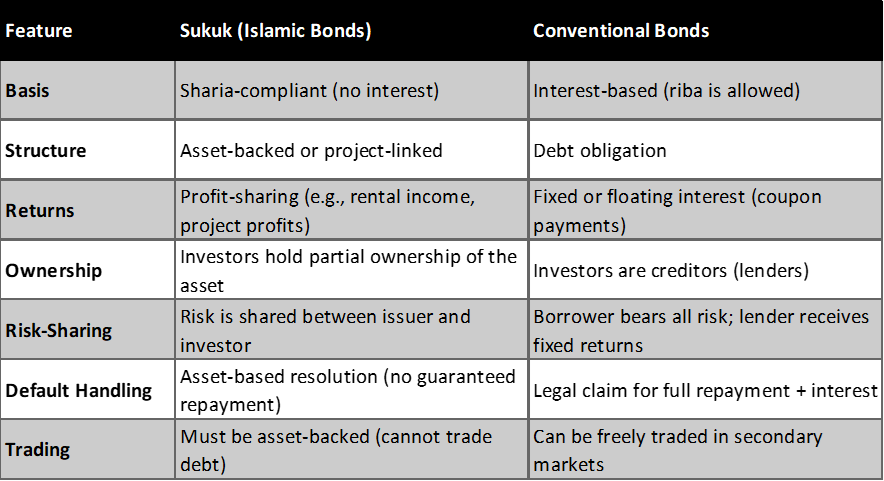
Sukuk (often referred to as Islamic bonds) are financial instruments that comply with Sharia (Islamic law), which prohibits interest (riba) and requires transactions to be backed by tangible assets or services. Unlike conventional bonds, which represent debt obligations with fixed interest payments, Sukuk represents ownership in an underlying asset, project or investment venture, providing returns based on profit-sharing or rental income.
Key Differences Between Sukuk and Conventional Finance:
Sukuk provide an alternative financing model that aligns with Islamic principles while offering a structured investment opportunity similar to conventional bonds but with key ethical and structural differences:
Typical sukuk structures include:
- Ijarah (Leasing Sukuk) – Rental income from assets like hospitals, schools or government buildings
- Istisna (Construction Sukuk) – Funds used to build assets like roads or power plants
- Mudarabah / Musharakah (Equity Sukuk) – Profit-sharing ventures with shared business risk
- Murabaha (Trade Sukuk) – Structured sale of commodities or goods at a markup
Financial Flow Within the Market:
- Investors fund a Special Purpose Vehicles (“SPVs”) through sukuk issuance
- SPV acquires an income-generating asset
- Asset leased or used to generate revenue
- Revenue distributed as returns (not interest)
- At maturity, asset is repurchased and capital returned
Why Malta Should Enter the Sukuk Market
Malta, at the crossroads of Europe, North Africa and the Middle East, holds unique advantages:
- Strategic EU location with a strong legal and financial infrastructure
- Opportunity to attract Islamic investors from the Gulf Cooperation Council, Malaysia and beyond
- Reputation as a fintech and fund management hub
- Desire for ethical, sustainable finance aligns with sukuk principles
What can Malta Implement?
- Government-backed Ijarah Sukuk
o Use state-owned buildings or infrastructure (e.g. ports, hospitals)
o Leaseback models for predictable returns
- Green Sukuk
o Fund renewable energy, climate adaptation or water infrastructure
o Aligns with Environmental, Social and Governance goals and attracts global ethical funds
- Real Estate Sukuk
o Develop tourism and logistics assets with Shariah-compliant financing
o Appeal to Gulf Cooperation Council investors familiar with asset-backed Islamic finance
Connecting to the Capital Market
The Malta Stock Exchange could serve as a regulated listing venue for sukuk, enabling:
- Secondary market trading
- Cross-border investment flows
- Integration with EU financial systems
Sukuk are not only ethical and stable financial tools, but they are also a gateway for Malta to access global Islamic capital, diversify its markets and position itself as a bridge between Europe and the Islamic world.